
My System For Getting Things Done
And how it helps me focus on what matters each day


As your engineering career progresses, so will the complexity of your responsibilities. Beyond handling routine tasks, you’ll find yourself leading project teams and delivering presentations to clients and senior leadership. Managing these diverse responsibilities effectively becomes crucial.
One way to learn how to manage your tasks, is to seek advice from your peers and manager. For instance, in a recent 1:1, a new engineer asked me about my approach for getting things done as a manager.
I told them that I write down a daily to-do list in my notebook. However, as we talked more about my process, I realized that there’s more nuance to this approach than meets the eye. It involves carefully choosing what to work on, maintaining focus, and adapting to new information.
Recognizing the value of this approach, I decided to write out my personal system for getting things done into a practical guide to help you streamline your productivity.
But first, what systems are out there?
Jake Knapp & John Zeratsky (JZ), authors of Make Time, share tactics that can help you focus on what matters every day. Some of my favorites are choosing a Highlight, creating a distraction-free phone, and scheduling email time. Jake and JZ have figured out how to deliver a fresh take on productivity and even make you laugh.
David Allen, author of Getting Things Done (GTD), shares a detailed system for getting control of your life by capturing, clarifying, organizing, reflecting, and engaging with all the things that might need to get done. Now, David is not a fan of to-do lists, but don’t worry, my version is an upgrade to the traditional way.
Last but not least, Tiago Forte, author of The PARA Method, which enables you to organize your life. His system breaks down GTD into four categories: Projects, Areas, Resources, and Archives. This is a simple system that has been critically acclaimed my many.
Why combine ideas from these books rather than picking one?

Undoubtedly, Make Time, Getting Things Done (GTD), and The PARA Method are exceptional resources that I highly recommend for enhancing productivity. Each of them brings valuable insights, but they also have their unique quirks.
GTD is a productivity classic, but it can be a bit challenging to maintain consistently. Make Time is a treasure trove of tactics, but it lacks a cohesive system. The PARA Method streamlines GTD, but focuses too much on resources and archives. I found myself wanting a customized blend of these approaches.
Therefore, I create my version, which would allow me to:
List the areas of my life that matter the most (PARA).
Define the most important goals I’m focusing on (Smarter Faster Better)
Create my daily tasks I want to get done (Typical checklist).
Select which one will be my highlight (Make Time)
Have a space to capture my thoughts, ideas, or things I might do (Getting Things Done)
Remember, what works for me might not be a perfect fit for you. However, it’s easier to build on existing knowledge than reinvent the wheel. The following sections will detail how you can implement this framework to get organized and make progress toward your goals.
I encourage you to customize and iterate on my approach to tailor it to your unique needs. As you learn new things or take on new responsibilities, don’t hesitate to refine your system accordingly.
Areas
The PARA method categorizes this as the collection of long-term responsibilities you wish to manage over time. This can encompass a wide range of aspects like family, friends, team management, coding projects, and more. However, I prefer a more high-level approach. When we delve into too much detail, our list can become overwhelming.
In my own journey, I found it beneficial to focus on the following high-level areas: Work, Family, Becoming a Leader (related to my newsletter), Fitness, Learning, and Rest and Relaxation. These are the aspects of life that hold the most significance for me.
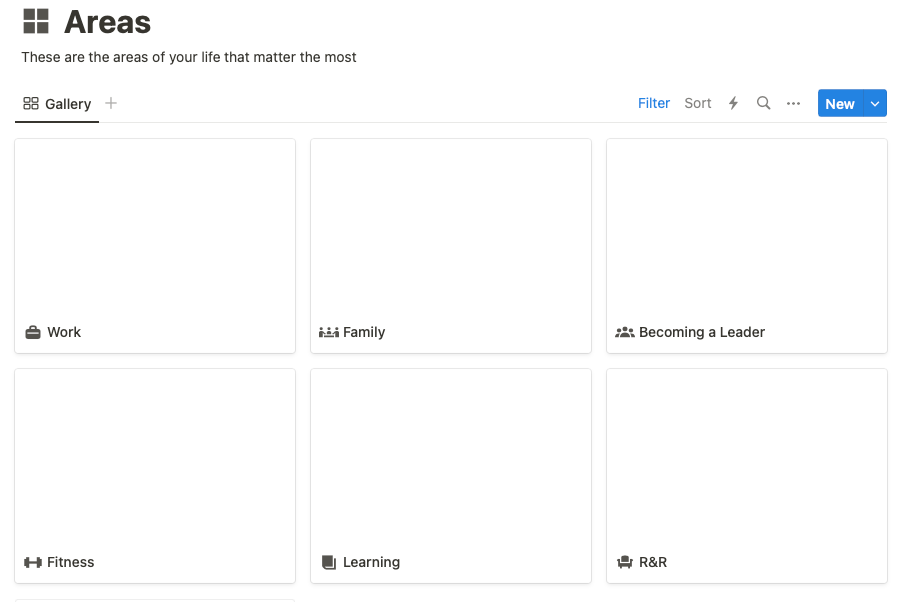
To determine your own areas of responsibility, interests, or life domains, consider asking yourself the following questions:
What are your primary areas of responsibility?
What long-term goals are you actively pursuing?
Which facets of your life hold the utmost importance to you?
By answering these questions, you can define your own set of key areas, providing a structured foundation for your personal productivity system.
Goals
There’s a debate about whether setting goals can limit your perspective and stifle other opportunities. However, taking the time to contemplate your interests, aspirations, and allowing room for adjustments as you gain new insights can be a powerful tool in directing your focus and tasks throughout the year.
I’ve always believed in setting goals for myself, but it wasn’t until 2019 that I got serious about tracking my progress. I was starting a new role and wanted to make the most out of it, which led me to read “Smarter Faster Better” by Charles Duhigg. In his book, Duhigg suggests the concept of stretch goals and making them SMART (Specific, Measurable, Achievable, Realistic, Time-bound). I applied this technique to establish goals related to team management, family commitment, and travel planning.
Here’s a guide to help you set your annual goals:
Define your stretch goal: Identify something that may seem ambitious but genuinely interests you.
Make It SMART: To refine your goal, answer these questions:
What is a specific subgoal?
How will you measure success?
Is this achievable?
Is this realistic?
What is your timeline?
3. Repeat until you are satisfied: Continue this process for each goal you want to set.
Once you’ve written the goal, it’s time to have a final check-in with yourself by asking: Do I actually care about accomplishing this goal? Is this a goal I can achieve? Does this goal align with an area of my life?
If the answer is “yes” to all three questions, keep the goal on your list. If it’s a “no” to any one of them, feel free to remove it. This way, you ensure that your goals are not only ambitious but also aligned with your personal values and aspirations.
Tasks
When I was starting out as an engineer, I had the privilege of working alongside a Project Manager who always seemed to have a handle on everything. They had a simple but effective approach — in meetings, he would whip out his trusty notebook, jot down notes, and craft to-do lists. Witnessing their success, I was inspired to give it a shot.
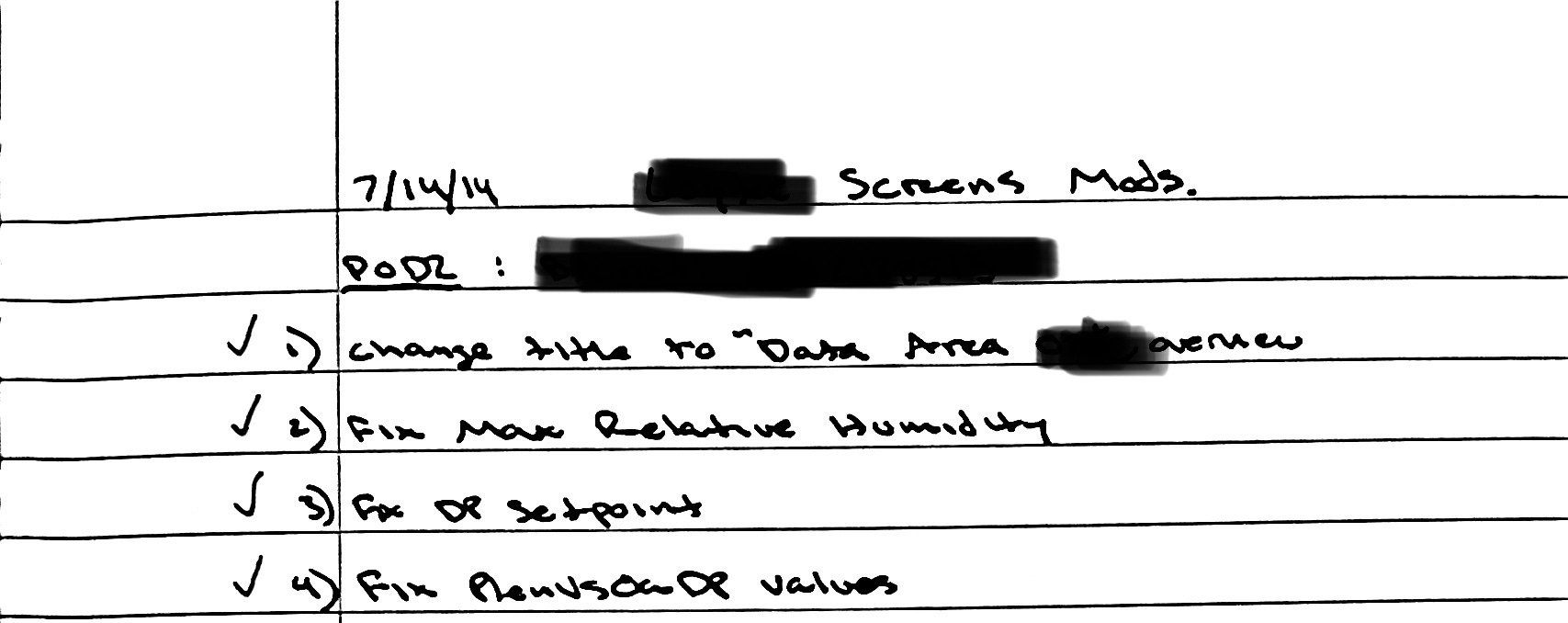
For nearly a decade now, I’ve followed this approach. Each morning, I open my notebook and create a fresh list of tasks I aim to accomplish for the day. This daily ritual keeps me on track, ensuring that I make informed decisions about where my focus should be.
Four ways to pick your tasks list:
Capability: Can I realistically complete this task?
Time: Do I have the available time to tackle it?
Energy: Do I possess the necessary energy and focus to see it through?
Priority: Is this task a top priority for today?
However, as life unfolds and you encounter new emails, instant messages, or post-meeting action items, your meticulously crafted task list can quickly become outdated. You need a flexible system to adapt to these changes, and that’s what Make Time’s “Highlight” concept helps solve.
Highlight
In the book Make Time, the authors introduce a powerful concept called the “highlight.” It’s a solution to a common problem — the shifting nature of priorities throughout the day that can leave your original task list feeling overwhelming. The key is to pinpoint the task that will be most rewarding by day’s end.
Selecting a highlight provides the freedom to adapt your task list as new challenges or opportunities arise. The authors of Make Time even encourage you to change your highlight as your priorities shift throughout the day.
As someone who doesn’t typically embrace every new buzzword, I can attest that this idea has had a profound impact on how I plan my day. Instead of merely creating a long task list and feeling disheartened if I only manage to complete a few items, I now take a moment to choose my daily highlight. This allows me to accommodate new priorities as they emerge while staying steadfast in my commitment to the highlight task.
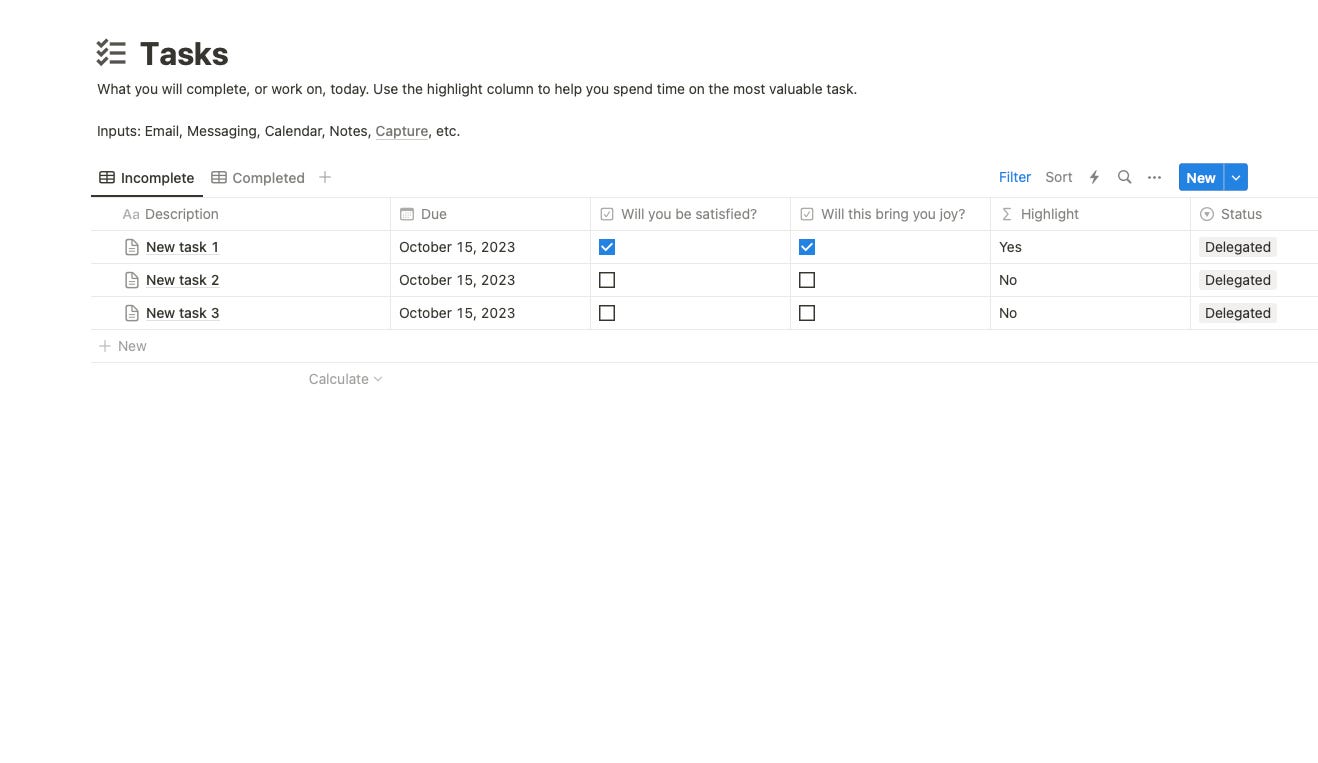
There are three ways to pick your highlight:
Is this task due today? (Urgency)
Will completing this task bring me the most satisfaction? (Satisfaction)
Will completing this task bring me the most joy? (Joy)
In my daily reflection, I record if I had to change my highlight. If so, I explain why.
Reflections
When my wife gifted me the 5-Minute Journal, I learned about reflecting on my day, a practice recommended by Make Time and Getting Things Done.
I’ve been using this journal off and on for five years. I use it when I feel overwhelmed with the things I’m working on and fall off when I have everything under control. Since I started writing this article, I decided to set a goal to reflect daily until the end of the year, so I maintain that sense of calm.
However, I needed to edit the 5-minute journal template to include information from Make Time and GTD.
Morning routine:
What am I grateful for?
What would make today great?
What is my highlight today?
Evening routine:
Did I make time for my highlight?
Did I change my highlight? If yes, why?
What good things happened today?
What could’ve made today even better?
Answering these questions will help you feel happier, be mindful about what you’re focusing on, and express gratitude for what you’ve done and the people in your life.
Capture
Your brain is for having ideas, not for holding them — David Allen

The majority of productivity systems emphasize the importance of jotting down your ideas as a means to declutter your mind. Failing to capture these thoughts can lead to open loops that drain your mental energy and hinder your ability to stay fully present.
But what exactly should you capture? The answer is simple: capture ideas. By transferring these thoughts from your mind to a designated storage space, you free up mental bandwidth and provide yourself with a resource for future review.
While some individuals take this process a step further by outlining the next action or considering delegation, I’ve personally discovered that merely entering these ideas into my “Capture” section is often sufficient to clear my mind.
The key here is to experiment and discover what works best for you. If you’re seeking a more structured approach to idea capture, you might want to explore David Allen’s workflow. for additional guidance.
In essence, there’s no predefined set of rules to follow. Your goal is to establish a single repository for recording ideas that fall into the categories of things you should do, need to do, or might do. This practice not only keeps your mind uncluttered but also ensures that valuable thoughts and insights are never lost.
Putting this all together in a Notion template
After a month of applying this system, I’ve experienced a significant shift in my approach to daily productivity. It’s not just about jotting down tasks but about subconsciously integrating my favorite productivity tips to zero in on what truly matters each day.
While I still carry around a notebook — because there’s something about pen and paper that helps me process information— I’ve taken these valuable tactics and transformed them into a dynamic Notion template. This template has effectively replaced my traditional pen-and-paper task list.
Using Notion allows me to visualize what holds the utmost importance in my daily life. It’s about more than just tasks; it’s about maintaining a holistic perspective on my goals and areas of focus.
If you’re interested in getting started with this combined approach, I shared my free template on Gumroad. Please reach out if you have any questions.
You got this!